
"Angola coffee history"
100 article(s) found

Java Coffee java Jawa
Java Coffee, whose English name is java coffee, is also translated as Java Coffee. Java coffee (java Java coffee) planting distribution Java coffee beans (coffee powder) belong to: Robasda (Robusta) varieties, mainly distributed in African countries such as C ô te d'Ivoire, Angola, Madagascar and the Philippines, Vietnam and Indonesia (Java) and other places. Java coffee growing environment

What are the coffee producing areas in Africa? la Souna Wahana Manor
Tanzania gourmet coffee has soft acidity and attractive aroma, which is absolutely worth enjoying. The coffee export of Tanzania plays an important role in the whole national economy. Bean-shaped berry coffee is very productive and is said to be more fragrant than ordinary coffee. Zambia is lighter than Kenyan coffee and is suitable for drinking in the afternoon. Coffee was introduced from Kenya and Tanzania in the early 20th century.

Types of coffee beans History Coffee Raw Bean Market
Types of coffee beans World Coffee production Brazil Coffee Fruit (Arabica) Coffee on the market are mainly Coffee Arabica, Coffee Robusta and Coffee Liberica. Each of them can be subdivided into more variety branches. The origin of coffee beans and most of the coffee beans in circulation in the market

History of Coffee Origin of Coffee processing species
Types of coffee beans World Coffee production Brazil Coffee Fruit (Arabica) Coffee on the market are mainly Coffee Arabica, Coffee Robusta and Coffee Liberica. Each of them can be subdivided into more variety branches. The origin of coffee beans and most of the coffee beans in circulation in the market

Colombian Coffee History Origin Colombian Coffee is good? why is it the most popular in the United States?
Professional coffee knowledge exchange more coffee bean information please follow the coffee workshop (Wechat official account cafe_style)

A brief introduction to the planting market price of nutty boutique coffee beans in West Java, Indonesia
Java: coffee bean species Robusta Sumatra (Sumatra): coffee bean species Arabica Java coffee (java Java coffee) the history of Java coffee beans (coffee powder) belongs to: Robasda (Robusta) variety, mainly distributed in African countries such as C ô te d'Ivoire, Angola, Madagascar and the Philippines, Vietnam and Indonesia (Java) and other places. Claw

A brief introduction to the planting Market Price of Fine Coffee Bean varieties in West Java, Indonesia
Java: coffee bean species Robusta Sumatra (Sumatra): coffee bean species Arabica Java coffee (java Java coffee) the history of Java coffee beans (coffee powder) belongs to: Robasda (Robusta) variety, mainly distributed in African countries such as C ô te d'Ivoire, Angola, Madagascar and the Philippines, Vietnam and Indonesia (Java) and other places. Claw

A brief introduction to the planting of fine coffee beans in West Java, Indonesia, geographical location, climate and altitude
Java: coffee bean species Robusta Sumatra (Sumatra): coffee bean species Arabica Java coffee (java Java coffee) the history of Java coffee beans (coffee powder) belongs to: Robasda (Robusta) variety, mainly distributed in African countries such as C ô te d'Ivoire, Angola, Madagascar and the Philippines, Vietnam and Indonesia (Java) and other places. Claw

Where did Brazilian coffee come from? introduction to the history and culture of development.
In 1657, an English newspaper reported that coffee has many effects on gastric ulcers, can strengthen the heart, promote digestion, lift spirits, relax the mood, treat eye diseases, colds, coughs, lung diseases, headaches, edema, gout, scurvy, adenosis, and other diseases. Coffee is sometimes described as an elixir of immortality, and sometimes it is regarded as poison, because some people suffer from coffee discomfort, such as insomnia and anger
The origin and history of coffee
Raj, an Arab doctor in the tenth century, wrote the earliest written records about coffee, but the cultivation of coffee dates back to 575 AD. Arabica, the best variety of coffee, came from Ethiopia. In the fifteenth century, southern Arabs in Yemen began to plant saplings from Ethiopia.
Coffee Culture History Coffee Origin and History
It is said that in the sixth century, a shepherd in Ethiopia found his sheep jumping everywhere. He observed carefully that the sheep had this excited reaction after eating only one kind of red tiredness. He tried to share the fruit among others, and all the people felt refreshed and refreshed after eating it, so the fruit was used as a pick-me-up.
Introduction of Coffee from 53 Coffee producing areas in the World (3)
twenty-one. Venezuela oil was once considered the main export of Venezuela (Venezuela). Although coffee trees were introduced from Martinique in 1730 and Venezuela, coffee production was almost abandoned at the height of the oil industry. Recently, coffee plantations have begun to recover, with original Tipica and bourbon coffee trees and new plantations

Stories of major producers of African coffee beans what are the characteristics of African coffee beans is African coffee expensive
Professional coffee knowledge exchange more coffee bean information Please pay attention to the coffee workshop (Wechat official account cafe_style) African coffee production currently accounts for only 13 per cent of global coffee production, down from 19-20 per cent in the 1960s and 1970s. According to the statistics of the International Coffee Organization (OIC), the total global coffee production in 2010 was 8 million tons, of which the proportion of African coffee was low. But the income from coffee is

Origin and History of Coffee
Legend has it that in the sixth century AD, a shepherd in Ethiopia found his sheep jumping around all of a sudden. He observed carefully that the sheep had this excited reaction after eating only a red fruit. He tried to share this fruit with others, and all of them felt refreshed and refreshed after eating it. Therefore, this fruit was used as a refreshing medicine.

A brief introduction to the history and culture of the origin and development of Arabica coffee in Indonesia
Even if the coffee has the same name (named from the place of origin), as long as the cultivated varieties are different, the flavor is different from the leaf rust-resistant varieties found in the African Congo, teaching the Arabica species to be more resistant to the disease. People like to compare robusta species with Arabica coffee. In fact, robusta species is originally a mutant of Congo species (scientific name Cofffea canephora), so it is said that

What growth conditions are needed to grow coffee beans?
The latitude is between the north and south latitudes, that is, the temperature in the tropical and tropical areas is about 21 degrees Celsius, and the sunshine is only a few hours a day. The terrain is mainly located in the mid-levels of 300 to 400 meters, or on slopes of 1500 to 2500 meters. The higher the altitude, the higher the quality. Because the sunshine time is short and the drainage is good. Under the coffee bar like the root tide, high in the middle of the coffee bar, placed in the coffee bar.

Coffee bean varieties and varieties of coffee beans and the origin of different varieties of coffee beans development history and culture
When it comes to Indonesian coffee, you must not miss Sumatra's high-grade mantenin. Its unique aroma and slightly acidic taste can be said to be the best in the world. In addition, Arabica coffee produced in Java is a favorite of Europeans, which has a bitter sweet, sweet and sour aftertaste that lasts for a long time. Top quality beans: Sumatra mantinFlavor characteristics: bitter and rich,
The coffee flavor of the world's largest coffee country describes the taste of Brazilian coffee.
In the first six months of 2008, Vietnam exported 570000 tons of coffee, with an export value of US $1.18 billion, far exceeding the level of the same period last year. In 2007, Vietnam's coffee exports exceeded 1 million tons for the first time, reaching an all-time high of US $1.6 billion. According to the statistics of the Coffee-Cocoa Association of Vietnam, the current coffee planting area in Vietnam is 500000 hectares, which can be divided into three categories according to the planting time.
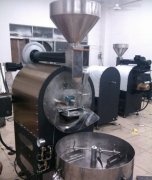
The fourth part of the history of coffee-the commercialization of coffee
For many coffee lovers, the period from the mid-19th century to the end of the 20th century was the dark age of coffee. In this day and age, coffee has lost the mysterious charm of the Middle East, become commercialized, and frankly become ordinary. When coffee was first introduced to England in the 17th century, it was enjoyed by all sectors of society. But the rich will enjoy it in their social clubs.

Coffee knowledge points: where does coffee come from? Deciphering the historical and cultural causes of coffee
Legend of Coffee History in the sixth century AD, a shepherd in Ethiopia found that his sheep were suddenly jumping everywhere. He observed carefully that the sheep had this excited reaction after eating only a kind of red tiredness. He tried to share the fruit with others, and all the people felt refreshed and refreshed after eating it, so the fruit was used.